


The Suit
- Aug 14, 2017
- 4 min read
So the suit, it's journey has been amazing; from where it started, to where it has now ended up and is still continuing to evolve with the modern times.

The suit is a traditional form of men's formal clothes in the Western world. For some four hundred years, suits of matching coat, trousers, and waistcoat have been in and out of fashion. The modern lounge suit appeared in the late 19th century, but traces its origins to the simplified, sartorial standard of dress established by the English king Charles II in the 17th century. In 1666, the restored monarch, Charles II, per the example of King Louis XIV's court at Versailles, decreed that in the English Court men would wear a long coat, a waistcoat (then called "petticoat"), a cravat (a precursor of the necktie), a wig, and knee breeches (trousers), and a hat.
Let's take a look at a brief timeline:
Regency
In the early 19th century, British dandy Beau Brummell redefined and adapted this style, then popularized it, leading European men to wearing well-cut, tailored clothes, adorned with carefully knotted neckties. The simplicity of the new clothes and their somber colors contrasted strongly with the extravagant, foppish styles just before.
Victorian
Towards the start of the Victorian period, the frock coat, initially not just black, became popular, and quickly became the standard daily clothing for gentlemen. From the middle of the 19th century, a new (then informal) coat, the morning coat, became acceptable. It was a less formal garment, with a cut away front, making it suitable for wearing while riding. Morning dress and the frock coat garments were not suits, because they were worn with trousers that didn't match in color or fabric; a matching waistcoat and trousers were considered informal and could be described using the short-lived term ditto suit. The frock coat was still the standard garment for all formal or business occasions, and a tailcoat was worn in the evenings.
Edwardian
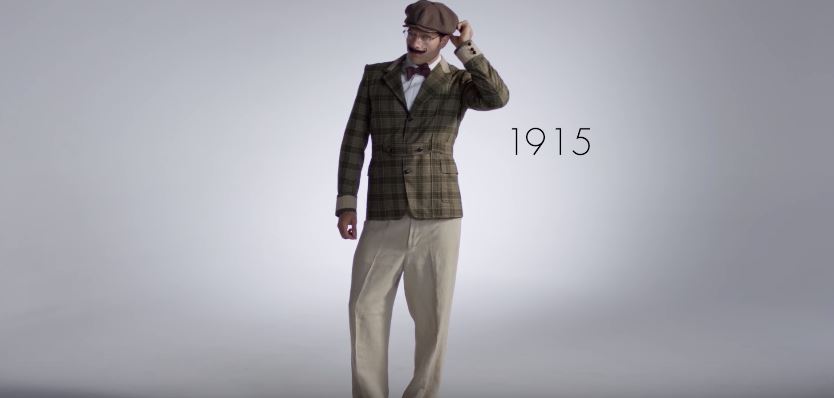
The beginning of the Edwardian era in the early 20th century brought a steady decline in the wearing of frock coats as the morning coat rose in relative formality, first becoming acceptable for businessmen, then becoming standard dress even in town. The lounge suit was slowly accepted as being correct outside its original settings, and during Edwardian times gradually began to be seen in town. While still reserved for private gatherings, usually with no ladies, black tie became more common.
Inter-war
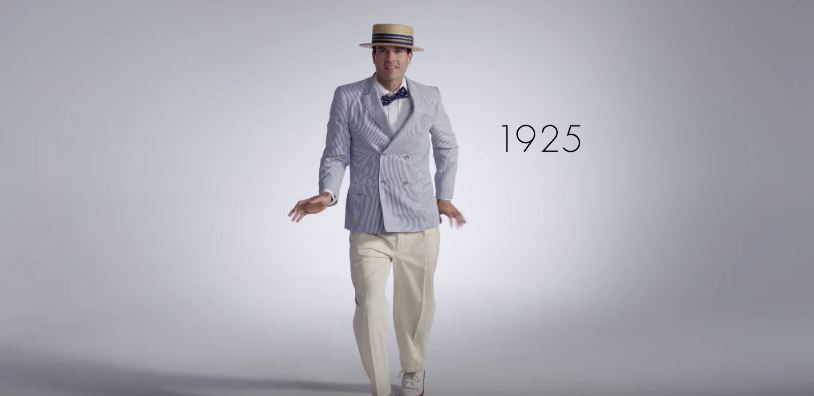
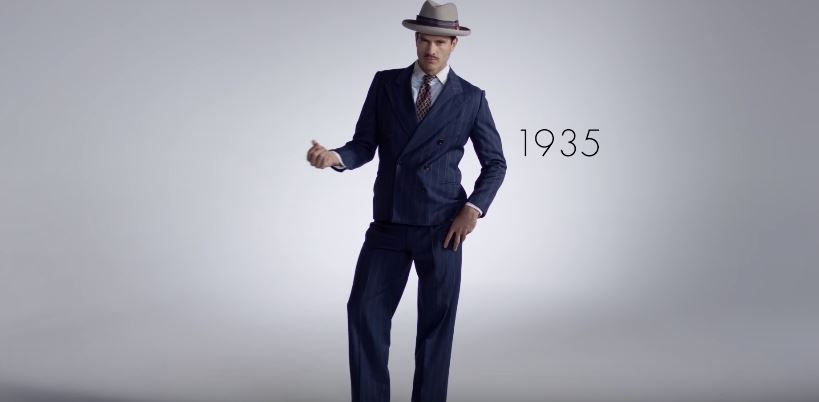
After the end of the first World War, most men adopted the short lounge coated suit. Long coats quickly went out of fashion for everyday wear and business, and the morning coat gained its current classification of "formal". During the 1920's, short suits were always worn except on formal occasions in the daytime, when a morning coat would be worn. Older, more conservative men continued to wear a frock coat, or "Prince Albert coat" as it was known. In America, for evening occasions, the short dinner jacket virtually replaced the long "full dress" tails, which was perceived as "old hat" and was only worn by old conservative men. In Britain, black tie became acceptable as a general informal alternative to white tie, though at the time the style and accessories of black tie were still very fluid.
Post-war
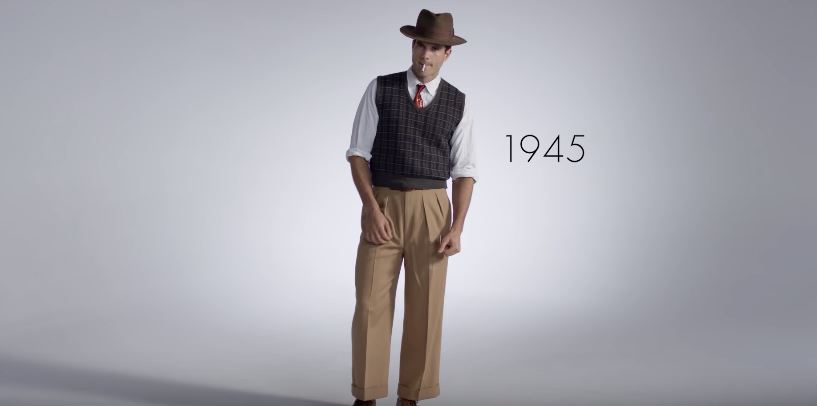
Throughout the 1940's and 1950's the trend was to simplify and modernize the suit as much as possible. For example, by the 1960's the size of the lapel had shrunk to a very small size. Suit coats were also cut as straight as possible without any indication of a waistline. Cloth rationing changed styles significantly, contributing to a large reduction in the popularity of many cuts, such as the double-breasted suit.
In the 1970's, a snug-fitting suit coat became popular once again and this style permitted the return of the waistcoat. This new three-piece suit style became associated with disco music and its culture, specifically popularized by the film Saturday Night Fever, where the tight waistcoat was basic to that fashion. The tight three-piece suit was equated with the discotheque culture. The socially conservative backlash against disco music culture ended the popularity of snug-fitting three piece suits.
In the late 1970's, several brands, most notably 'Haggar', started to introduce the concept of "suit separates", separately sized coats and pants allowing a man to purchase the appropriate coat and pant size. "The concept of 'Custom Fit Suits' was a 'Haggar' innovation allowing gentlemen to purchase jackets and pants separately, by size, which eliminated the need for tailoring the pant."
The 1980's saw a trend towards the simplification of the suit once again. The jacket became looser and the waistcoat was completely dispensed with. A few suit makers continued to make waistcoats, but these tended to be cut very low and often had only four buttons. The waistline on the suit coat went down again in the 1980's to a position well below the waist. By 1985-1986, three-piece suits were on the way out and making way for cut double-breasted suits and two piece single-breasted.
The late 1990's saw the return to popularity of the three-button two-piece suit, which then went back out of fashion some time in the first decade of the 21st Century.




Switch it up with the comfy Stussy Reversible Fleece. Full range at Stussy Jacket.
Add edge to your layering game with a Ladies Leather Vest. Shop trendy styles today at Biker Jacket.
Turn heads in the elegant Beth Dutton Pink Coat. A stunning western piece available at Western Apparel.